Why Threading Is Actually the Kindest Thing You Can Do for Your Skin (And Why Other Methods Can't Say the Same)
Most people think of brow shaping as a purely cosmetic decision. Pick the method, get the shape, move on. But if you've ever walked out of a waxing appointment with red, irritated skin — or spent a week recovering from a tweezing session that went a little too far — you already know that how you remove hair matters just as much as the result.
What's less obvious is that the method you choose isn't just about comfort. It's about what's happening to your skin at a cellular level. And when you look at the science, threading stands in a category all its own.
Your Skin Barrier: The Basics
Before we get into the method-by-method breakdown, it helps to understand what we're actually protecting. Your skin barrier — technically called the stratum corneum — is the outermost layer of your skin. It's a tightly organized system of cells and lipids that keeps moisture in and environmental aggressors out. Think of it like a brick wall: the skin cells are the bricks, and natural oils and proteins are the mortar holding everything together.
When that barrier gets disrupted, even slightly, you're looking at potential moisture loss, increased sensitivity, and a higher risk of inflammation. The skin around your eyes and brows is thinner and more delicate than almost anywhere else on your face, which means it's especially vulnerable to anything that compromises that structure.
What Waxing Actually Does to Your Skin
Waxing is fast, effective, and wildly popular — but it comes with a trade-off that doesn't get talked about enough. When wax is applied to the skin and then pulled away, it doesn't just grab the hair. It grabs the top layer of skin cells along with it.
This process, sometimes called epidermal stripping, literally removes part of your skin barrier every time you wax. Dermatologists have long noted that repeated waxing can thin the skin over time, disrupt the lipid layer, and leave the area more reactive to UV exposure, products, and environmental pollutants. If you've ever noticed that your freshly waxed brow area looks extra shiny or feels unusually tight, that's your skin telling you its first line of defense just got partially removed.
For most people, the skin recovers. But with repeated sessions over months and years, that recovery can become less complete — especially in the already-thin skin around the brow bone.
Tweezing: Precise, But Not Without Consequences
Tweezing feels like the most controlled option — one hair at a time, full visibility, total precision. And in terms of targeting individual hairs, it is. The problem is what happens beneath the surface.
Every time you tweeze, you're pulling a hair out from the follicle with a quick, sharp force. That motion creates micro-trauma to the surrounding tissue. Do it once, no big deal. Do it repeatedly across the same small area, and you're dealing with cumulative low-grade inflammation that can affect follicle health, slow hair regrowth, and over time, contribute to patchiness or scarring in the brow area.
There's also the issue of technique. Most people tweeze at home, which means inconsistent angles, inconsistent force, and a much higher chance of breaking the hair at the surface rather than pulling it cleanly from the root — which leads to ingrown hairs and additional irritation.
Threading: Where Precision Meets Skin Intelligence
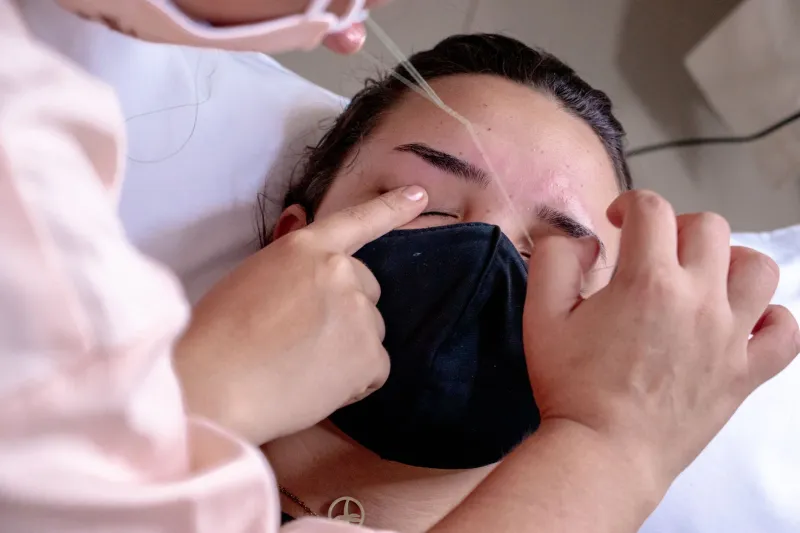
Here's where it gets interesting. Threading works by using a thin, twisted cotton thread to trap and lift hair directly from the follicle — but crucially, the thread never adheres to the skin itself. It contacts the hair, not the surface cells.
That single distinction changes everything from a skin-barrier standpoint.
Because threading doesn't bond to the skin the way wax does, it doesn't strip away those precious outer skin cells. The stratum corneum stays intact. The lipid layer isn't disrupted. And because a skilled threading specialist can remove multiple hairs in a single fluid motion, the process is faster and more controlled than tweezing — meaning less cumulative trauma per session.
Threading specialists at salons like Beauty & The Brow Orlando are trained to work with the natural direction of hair growth, which reduces the mechanical stress on each follicle. Less stress on the follicle means less inflammation in the surrounding tissue — and over time, that adds up to healthier skin that actually holds up better between appointments.
The Inflammation Factor
One thing dermatologists consistently emphasize is that chronic low-grade inflammation is one of the biggest silent contributors to premature skin aging. Every time you introduce unnecessary trauma to the brow area — whether through aggressive waxing, at-home tweezing, or harsh post-removal products — you're triggering an inflammatory response that, repeated often enough, starts to affect collagen production and skin elasticity.
Threading's gentler mechanical action produces significantly less inflammatory response than waxing, particularly for people with sensitive skin, rosacea-prone complexions, or anyone using active ingredients like retinoids or exfoliating acids. (Quick note: if you're using retinol or prescription tretinoin, you should always let your specialist know before any hair removal service — these products thin the skin and change how it responds.)
For Orlando clients dealing with the added skin stress of year-round heat, humidity, and sun exposure, keeping inflammation in check isn't just a nice-to-have. It's genuinely protective.
What Happens to Your Skin Long-Term
The cumulative picture is where threading really earns its reputation. Clients who've made the switch from waxing to threading often report that their skin feels less reactive over time, that redness clears faster after sessions, and that the brow area looks more even-toned and less prone to the kind of patchy texture that repeated waxing can leave behind.
Threading also doesn't require any heat (unlike hot or warm wax), which matters for skin that's already dealing with sun damage or redness. No chemicals, no adhesives, no thermal stress — just the thread, the technique, and a specialist who knows exactly what they're doing.
The Skill Component Is Everything
It's worth being clear about one thing: threading's skin-protective benefits are only as good as the person doing it. In the hands of an experienced specialist, threading is precise, efficient, and genuinely kind to the skin. Done carelessly, it can cause irritation or uneven results just like any other method.
That's why choosing where you go matters as much as choosing the method. At Beauty & The Brow Orlando, threading is treated as a craft — one that takes into account not just the shape of your brows, but the condition and sensitivity of the skin underneath them.
The Bottom Line
If you've been treating brow shaping like a purely aesthetic decision, it might be time to think a little bigger. The method you choose has real, measurable effects on your skin's health over time — and threading, when done right, is the rare beauty service that delivers on both fronts. Better brows, and a skin barrier that's actually better off for the experience.
That's not a bad deal.