Your Brows Are Running Defense for Your Whole Face — Here's What That Actually Means
Most people think about their eyebrows in terms of aesthetics — shape, fullness, symmetry, the perfect arch. What they don't think about is the thin, complex layer of skin underneath those hairs that's doing a whole lot more than just holding follicles in place.
That skin is part of your facial barrier. And it turns out, it's one of the most reactive, sensitive, and consequential patches of skin on your entire face.
Dermatologists and threading specialists have been paying closer attention to the brow zone in recent years, and what they're finding is genuinely surprising. The way you treat your brows — or the way someone else does — can ripple outward in ways that affect moisture retention, inflammation levels, and even how your skin behaves during the rest of your routine. It's not just about the hairs. It's about everything happening underneath them.
The Skin Beneath Your Brows Is Different From the Rest of Your Face
Here's something worth knowing: the periorbital area — the skin around your eyes and brows — is significantly thinner and more permeable than the skin on your cheeks or forehead. Estimates vary, but the skin around the eye and brow region can be up to ten times thinner than skin elsewhere on the face.
Thinner skin means a less robust barrier. It absorbs products faster, reacts more quickly to friction and heat, and recovers more slowly from disruption. When that barrier takes a hit — from over-tweezing, harsh waxing, or repeated irritation — the effects don't stay contained to the brow line. Inflammatory signals travel. Moisture imbalances spread. The whole neighborhood starts to feel it.
This is the part most people skip over when they're thinking about brow care. They're focused on the shape. The skin is an afterthought.
What Aggressive Brow Manipulation Actually Does to Your Barrier
Let's talk about what happens when the brow zone gets overworked.
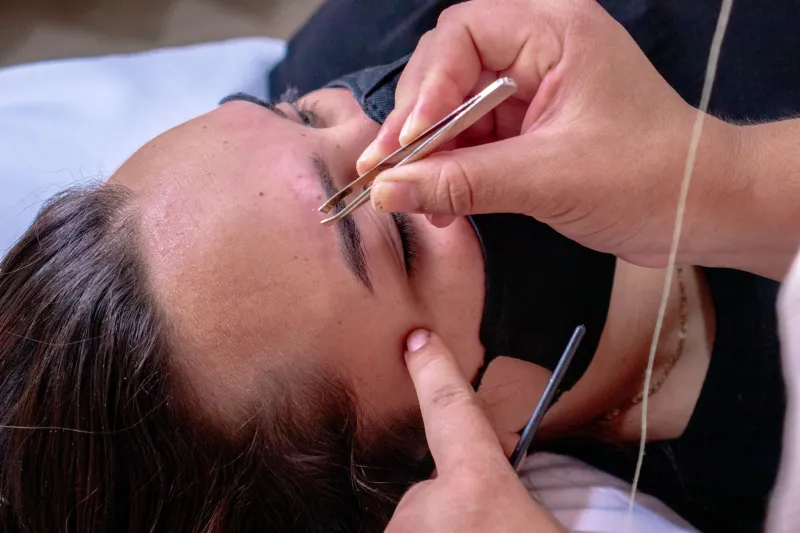
Tweezing is the most common culprit. Each time you pluck a hair, you're not just removing the strand — you're creating a micro-wound in the follicle and the surrounding tissue. Do that repeatedly, especially without letting the area fully recover, and you're continuously disrupting the skin's ability to maintain its protective function.
Waxing introduces a different set of concerns. Hot wax adheres to both hair and skin, and when it's removed, it takes surface skin cells along with it. For most people, occasional waxing in skilled hands is manageable. But frequent waxing, especially on already-sensitized skin, can strip the lipid layer that keeps moisture locked in and irritants locked out. Once that layer is compromised, your skin becomes more reactive — to products, to environmental stressors, to everything.
Over-plucking has its own long-term consequences. Beyond the well-documented risk of permanent follicle damage, obsessive tweezing keeps the brow zone in a near-constant state of low-grade irritation. That chronic inflammation can contribute to redness that extends beyond the brows themselves, and in some cases, it can sensitize the surrounding skin to a degree that makes it harder to tolerate even gentle skincare products.
Why Threading Specialists Talk About Skin Health, Not Just Shape
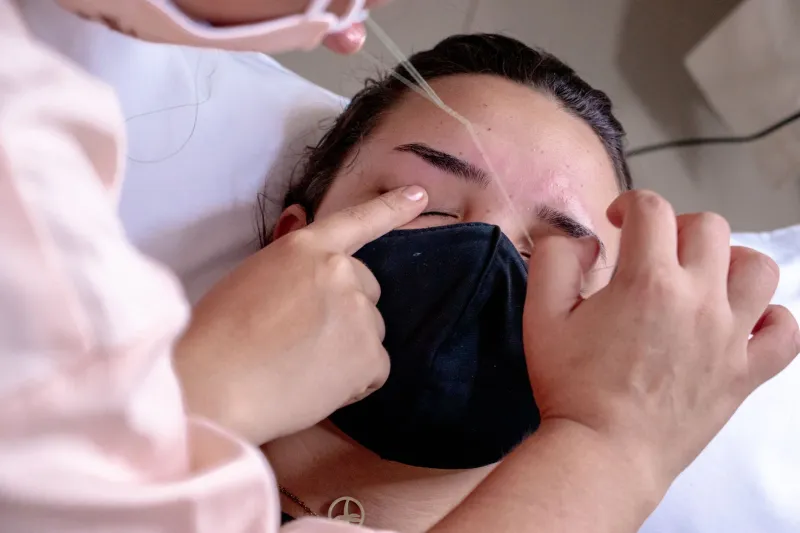
At Beauty & The Brow Orlando, the conversation about brows has always been bigger than the arch. Threading, as a technique, is inherently less invasive than waxing precisely because it doesn't adhere to the skin — the thread catches and removes the hair at the follicle level without pulling at the surface layer itself.
That distinction matters more than most clients initially realize.
Experienced threading specialists are trained to read the skin, not just the hair. They're looking at texture, sensitivity, and how the brow zone is responding in real time. A skilled threading professional isn't just sculpting your arches — they're navigating a sensitive patch of skin that has a direct relationship with the rest of your complexion.
When threading is done correctly, the skin barrier around the brows stays largely intact. There's minimal mechanical stress on the surface layer, which means less post-appointment inflammation, less disruption to the moisture barrier, and a faster return to baseline for your skin.
Compare that to a wax session that leaves the brow area red, tight, and visibly reactive for hours — or longer. That's not just cosmetic irritation. That's your barrier telling you it's been compromised.
The Inflammation Ripple Effect
Here's the part that tends to surprise people the most: inflammation in the brow zone doesn't necessarily stay in the brow zone.
Your skin is connected. Inflammatory pathways don't respect the invisible lines between your forehead, your brow, and your upper cheek. When one area is chronically irritated, it can raise the overall inflammatory tone of the surrounding tissue. That can show up as increased redness across the face, heightened sensitivity to products you've used without issue for years, or a general feeling that your skin is just... harder to manage than it used to be.
Dermatologists sometimes see this pattern in clients who can't pinpoint why their skin has become more reactive. They've changed their diet, adjusted their skincare routine, tried different products — but the issue is actually originating in how they're handling their brows.
Once the brow zone gets a break from aggressive manipulation and the barrier has a chance to recover, the broader skin often settles down too.
What You Can Do Right Now
The good news is that your skin barrier is remarkably resilient when you give it a chance to do its job.
First, take a hard look at how often you're manipulating your brows between professional appointments. Constant at-home tweezing, even just a few hairs here and there, keeps the brow zone in a state of ongoing disruption. If you're prone to reaching for the tweezers every other day, try extending the gap and letting a professional handle the shaping on a regular schedule instead.
Second, treat the brow area like the sensitive zone it is. When you're applying moisturizer or SPF, don't skip the brow line. When you're removing makeup, use gentle pressure — don't drag or pull across that area.
Third, pay attention to how your skin responds after brow appointments. Some redness immediately after threading is normal. If it's lasting more than a few hours, or if your skin feels tight and reactive for days afterward, that's worth mentioning to your threading specialist. A good one will adjust their technique and help you figure out what's going on.
The Bigger Picture
Your eyebrows are doing more work than you've probably given them credit for — and so is the skin beneath them. The brow zone is a gateway, not just a frame. How you treat it sends ripple effects across your entire complexion.
The threading-first philosophy that guides what we do at Beauty & The Brow Orlando has always been rooted in this understanding. Precision isn't just about getting the shape right. It's about respecting the skin you're working with and understanding that every brow decision is also a skin decision.
Your arches deserve thoughtful care. And so does everything underneath them.