Could Your Brow Routine Actually Be Saving Your Skin's Moisture? The Science Might Surprise You
When you sit down in the threading chair, you're probably thinking about shape. Maybe you've got a mental image of the arch you want, or you're hoping we can finally tame that one stubborn hair that just refuses to cooperate. What you're almost certainly not thinking about is your skin barrier.
And yet — that's exactly where things get interesting.
There's a growing conversation in dermatology circles about the relationship between facial hair removal, specifically threading, and the skin's ability to hold onto moisture. It's not the flashiest wellness headline, but for anyone dealing with dry patches around the brows, flakiness near the forehead, or that tight, parched feeling that no serum seems to fix — this connection is worth understanding.
The Peach Fuzz Problem Nobody Talks About
Here's something most people don't realize: fine facial hair — the soft, barely-there fuzz that covers more of your face than you might think — can actually work against your skin's hydration goals.
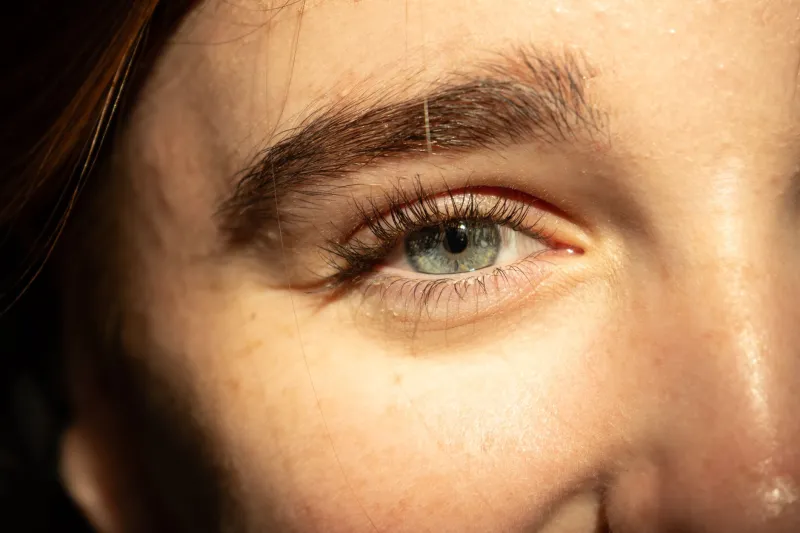
Peach fuzz acts like a net. It traps dead skin cells, environmental debris, and yes, bacteria, right up against the surface of your skin. In the brow zone specifically, where oil production tends to be higher and expression lines are already forming, that buildup creates a microenvironment that can interfere with how well your moisturizers and serums actually absorb.
When threading clears that layer of fine hair from the brow area and upper cheek region, it's essentially doing a light mechanical exfoliation at the same time. The skin underneath is cleaner, smoother, and more receptive to whatever you apply next. That's not marketing language — it's basic skin physiology.
What Dermatologists Are Starting to Say
Research into the skin microbiome has picked up significantly over the last decade, and some of the findings are directly relevant here. Studies examining the facial microbiome have shown that areas with denser fine hair tend to harbor more microbial activity — not always the harmful kind, but enough to create mild inflammatory responses in sensitive skin types.
Chronic low-grade inflammation, even when it's invisible to the naked eye, is one of the leading culprits behind compromised skin barrier function. And a compromised skin barrier is essentially a leaky bucket — no matter how much hydration you pour in, the skin can't hold it effectively.
By keeping the brow zone consistently clean and free of excess hair, you're reducing one of the triggers that can quietly undermine your barrier over time. It's a small intervention with a disproportionate payoff, especially if you've been puzzled by persistent dryness that doesn't respond to your usual routine.
The Moisture Retention Angle
Let's talk about transepidermal water loss, or TEWL — the technical term for moisture evaporating through the skin rather than staying where it belongs. Healthy skin has a strong enough barrier to minimize TEWL, keeping hydration locked in. Skin that's dealing with buildup, inflammation, or a disrupted surface loses moisture faster.
The brow area is uniquely vulnerable here for a few reasons. It's one of the most expressive zones on the face, meaning it moves constantly — raising, furrowing, squinting — which puts ongoing mechanical stress on the skin. It's also an area where many people over-tweeze, wax aggressively, or use harsh DIY products without thinking twice about the downstream effects.
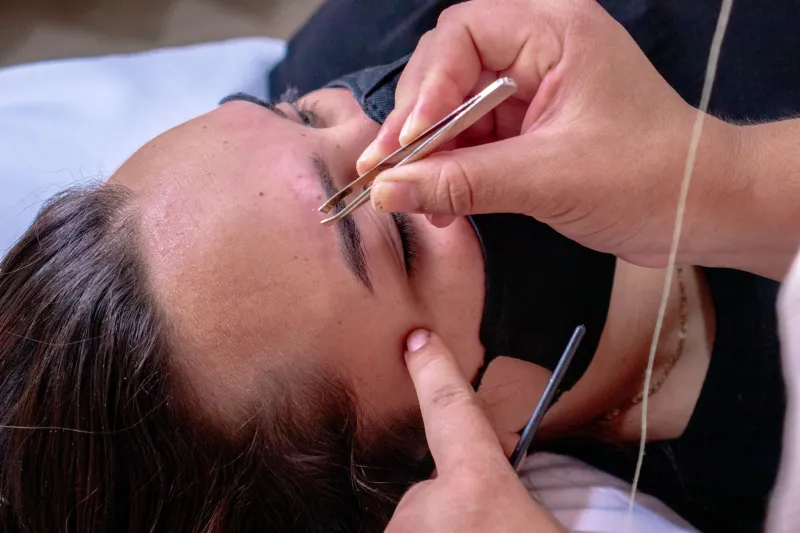
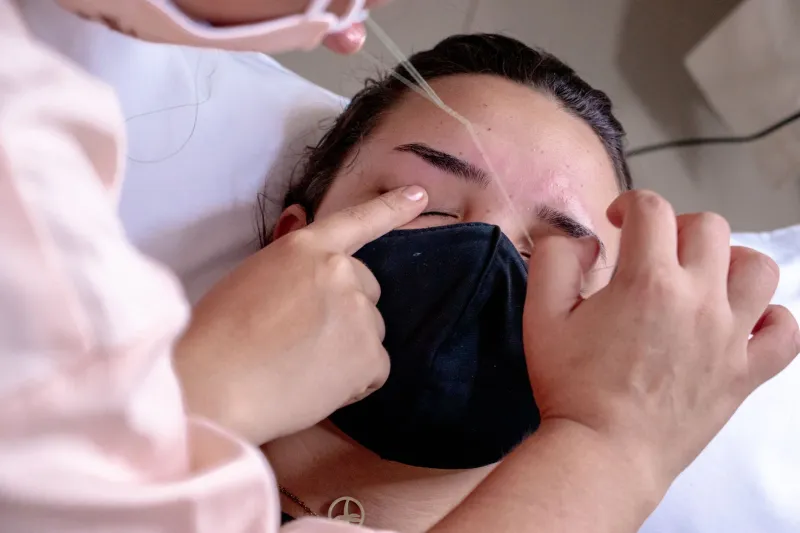
Threading, when done correctly by a trained professional, removes hair from the root without pulling at the skin itself. Unlike waxing, which adheres to the skin surface and lifts away a layer of cells along with the hair, threading is more precise and significantly less disruptive to the skin's outer layer. That matters enormously when you're trying to preserve barrier integrity.
Why the Brow Zone Is a Hydration Priority
Think about where your face shows dehydration first. For most people, it's around the eyes, across the forehead, and yes — right along the brow line. These areas have thinner skin, more movement, and often less attention paid to them during a regular skincare routine. People diligently moisturize their cheeks and chin but forget to bring that same care up into the brow zone.
Adding regular threading to your routine creates a natural touchpoint for that area. When you're getting your brows done consistently — every three to five weeks is the sweet spot for most people — you're also creating an opportunity to notice how the skin in that zone is behaving. Is it dry? Congested? More sensitive than usual? A good brow professional will often flag these things before you do.
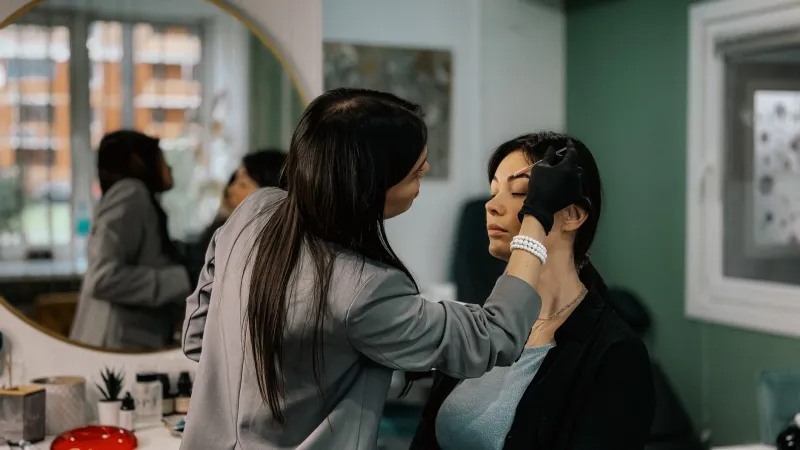
At Beauty & The Brow Orlando, we see this play out constantly. Clients who come in regularly tend to have noticeably healthier skin in the brow area compared to those who go months between appointments. Part of that is the threading itself. Part of it is simply the ongoing attention.
Building Threading Into Your Hydration Strategy
So what does this look like in practice? A few simple shifts can help you get the most out of the brow-skin barrier connection.
Time your appointments with your skincare routine in mind. Threading right before you apply a new serum or treatment lets that product absorb into cleaner, smoother skin. Many clients love getting their brows done before a hydrating facial for exactly this reason.
Don't skip aftercare. Post-threading, the skin in the brow area is primed to receive moisture. A gentle, fragrance-free moisturizer applied immediately after your appointment helps lock in hydration while the skin is most receptive.
Stay consistent. The hydration benefits of threading are cumulative. One appointment helps, but a regular schedule is what creates lasting improvements in skin texture and moisture retention in the brow zone.
Pair with a barrier-supporting routine. Ceramides, hyaluronic acid, and niacinamide are all ingredients that work beautifully alongside a regular threading schedule. They shore up the barrier that threading helps maintain.
The Bigger Picture
Brow care has always been about more than aesthetics — though the confidence boost from a clean, well-shaped arch is very real and very valid. But when you start to look at what a good threading routine is actually doing for the skin underneath those brows, the case for making it a non-negotiable part of your beauty strategy gets a lot stronger.
You're not just shaping your face. You're clearing the way for your skin to do its job better — to hold onto moisture, defend against environmental stressors, and stay resilient in a Florida climate that is genuinely not doing your skin any favors.
That's a pretty compelling reason to keep your next appointment.