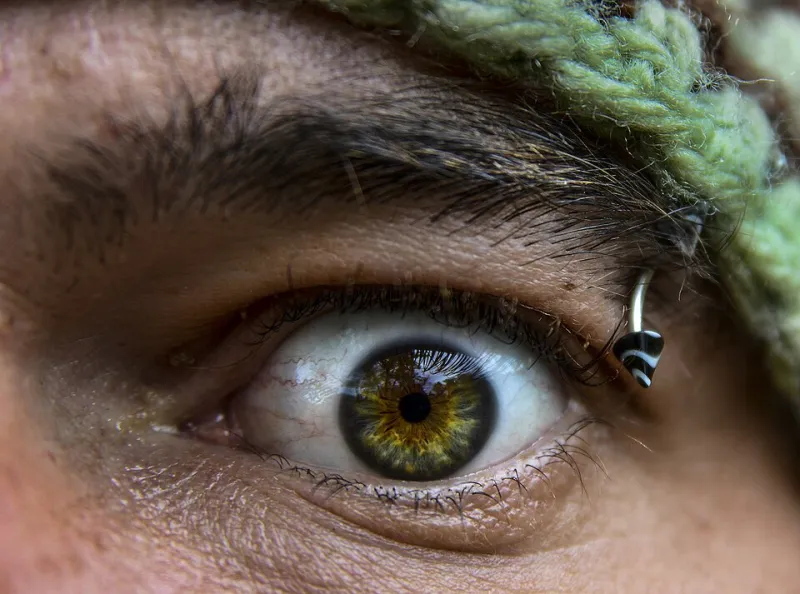
What's Really Happening to Your Face When You Mess With Your Brows

Photo by Photo by Chalo Garcia on Unsplash on Unsplash
Your Brows Are More Connected to Your Skin Than You Think
Most people treat their eyebrows like a separate project — something to shape, tame, and style without too much thought about what's happening underneath. But the skin in your brow area is genuinely one of the most complex zones on your entire face. It's packed with nerve endings, lymphatic vessels, and structural tissue that doesn't just sit there looking pretty. It actively communicates with the surrounding skin, and when you stress it out, the rest of your face can feel it.
At Beauty & The Brow Orlando, we see this play out all the time. Someone comes in with redness along their temples, or unexpected breakouts near their forehead, or skin that just feels reactive and tight — and when we start talking through their routine, the brow care piece is often where things went sideways. So let's break down what's actually going on beneath the surface.
The Skin Barrier 101 (And Why It Matters Here)
Your skin barrier — technically called the stratum corneum — is the outermost layer of your skin. Think of it like a brick wall: skin cells are the bricks, and lipids (fats) are the mortar holding everything together. When that wall is intact, it keeps moisture in and irritants out. When it gets damaged, things get leaky in both directions.
The skin around your brows is thinner and more sensitive than a lot of other areas on your face. It doesn't have the same thickness as your cheeks or forehead, which means the barrier there is easier to disrupt. Threading, waxing, plucking, even over-applying brow gels and pomades — all of these can chip away at that barrier, sometimes in ways that aren't immediately obvious.
Here's where it gets interesting: your skin barrier isn't just a passive wall. It's full of immune cells, sensory receptors, and signaling proteins that respond to stress. When the barrier gets compromised in one spot, those cells send out inflammatory signals — cytokines and other chemical messengers — that can travel beyond the original site of irritation.
Why Brow Grooming Can Trigger a Face-Wide Response
Let's talk about threading specifically, since it's one of our specialties and one of the most misunderstood treatments out there. Threading is incredibly precise and, when done correctly, is actually gentler on the skin than waxing. But even a well-executed threading session is still a form of mechanical stress on the skin. You're removing hair from the follicle, which creates a micro-wound at each extraction point.
For most people, that's totally manageable — the skin recovers quickly, redness fades within an hour or two, and everything's fine. But if your skin barrier is already compromised (say, from over-exfoliating, sun exposure, or a disrupted microbiome), those micro-wounds can become entry points for bacteria and irritants. The inflammatory response that kicks in can then spread laterally through the skin's network of capillaries and nerve fibers.
Waxing adds another layer of complexity. Hot wax doesn't just pull hair — it also lifts skin cells, strips away some of the lipid layer, and can trigger a localized histamine response. For people with sensitive skin or rosacea, this can cause redness and flushing that extends well beyond the brow zone, sometimes spreading across the forehead or down toward the cheeks.
Plucking is often considered the most harmless option, but doing it too aggressively or too frequently can cause follicle trauma and create chronic low-grade inflammation in the brow area. Over time, that kind of repeated stress can affect the texture and tone of the surrounding skin.
The Lymphatic and Nerve Factor
Here's something that doesn't get talked about nearly enough: your brow area sits right on top of several lymphatic drainage pathways that run toward your temples and down toward your jaw. Lymphatic vessels are responsible for clearing waste, excess fluid, and immune cells from your tissues. When the skin in your brow zone gets inflamed, it can slow down lymphatic flow in that area, which contributes to puffiness, dullness, and that heavy, congested feeling some people notice around their eyes and temples.
The nerve density in the brow area is also significant. The supraorbital nerve runs right through this zone, and it's connected to a broader network that covers much of your forehead and scalp. Repeated trauma to the skin here — even minor trauma — can sensitize these nerves over time, making the entire region more reactive to touch, temperature, and topical products. If you've ever noticed that your forehead feels more sensitive after a brow appointment, this is likely why.
How to Protect Your Skin Barrier Without Sacrificing Your Brows
None of this means you need to give up brow grooming. It just means being smarter about how you approach it.
Space out your appointments. Giving your skin at least three to four weeks between threading or waxing sessions allows the barrier to fully recover. Rushing back in too soon doesn't give your skin enough time to rebuild.
Prep your skin beforehand. Coming in with clean, calm skin — not freshly exfoliated, not sunburned, not irritated from actives like retinol or AHAs — makes a real difference. We always recommend skipping exfoliating acids for at least 48 hours before your appointment.
Post-treatment care is non-negotiable. After any brow treatment, apply a gentle, fragrance-free moisturizer to the area as soon as possible. Ingredients like ceramides, niacinamide, and panthenol are particularly good for reinforcing the skin barrier. Avoid active ingredients for at least 24 hours after your appointment.
Be honest with your esthetician. If your skin is going through something — a new medication, a reaction to a product, a flare-up of eczema or rosacea — say so before your appointment. A good esthetician will adjust their approach accordingly.
Consider the method. Threading is generally the least disruptive option for people with sensitive or reactive skin because it doesn't involve heat or adhesives. If you've been reacting to waxing, it might be worth switching.
The Big Picture
Your brows are worth caring about — they frame your face and, honestly, they deserve a thoughtful routine. But they don't exist in isolation. The skin around them is woven into a larger system that keeps your whole face functioning, and when that system gets stressed, you feel it.
At Beauty & The Brow Orlando, our approach has always been about more than just shaping. It's about understanding the skin we're working with and making choices that support it long-term. Precision matters — not just for the aesthetic result, but for the health of the skin underneath.
So next time you're thinking about your brow routine, zoom out a little. Ask yourself not just what do I want my brows to look like, but what does my skin need right now? That shift in perspective can make a bigger difference than you'd expect.