How Your Brow Routine Could Be Quietly Dismantling Your Skin's Natural Shield
Let's be honest — most of us don't think much about skin biology when we're sitting in the brow chair. We're focused on shape, symmetry, and whether our arches are going to look as good as the inspo photo we saved three weeks ago. But underneath all of that? There's a whole lot of science happening, and some of your most routine brow habits might be working against your skin in ways you'd never expect.
The area around your eyebrows is some of the most sensitive real estate on your entire face. The skin there is thinner, more reactive, and more vulnerable to environmental stressors than, say, your cheeks or forehead. That makes it especially important to understand what repeated treatments are doing to the protective layer that keeps your complexion healthy.
What Exactly Is the Skin Barrier — and Why Should You Care?
Think of your skin barrier like the brick-and-mortar wall of your face. The "bricks" are your skin cells (called corneocytes), and the "mortar" holding them together is a blend of lipids — ceramides, fatty acids, and cholesterol. Together, they form what's called the stratum corneum, the outermost layer of your skin.
This barrier does two very important jobs: it keeps moisture locked in, and it keeps irritants, bacteria, and environmental aggressors locked out. When it's functioning well, your skin looks plump, calm, and resilient. When it's compromised? You start seeing dryness, redness, increased sensitivity, and over time, accelerated signs of aging like fine lines and uneven texture.
Here's the kicker — many of the most popular brow treatments are inherently disruptive to this barrier, especially when done frequently or aggressively.
The Treatments Most Likely to Cause Barrier Disruption
Waxing is probably the biggest offender. Hot wax adheres not just to hair but to the top layer of skin cells. When the strip is pulled away, it physically removes part of the stratum corneum along with the hair. Do that repeatedly in the same area, and you're essentially exfoliating your skin barrier every few weeks whether you meant to or not. For people with naturally sensitive skin or conditions like rosacea or eczema, this can trigger flare-ups that extend well beyond the brow zone.
Plucking and tweezing, while gentler than waxing, still create micro-trauma at the follicle level. Each time you pull a hair, you're tugging at the surrounding skin and creating a tiny inflammatory response. That's manageable in small doses, but if you're someone who plucks obsessively — a little here, a little there, every day — that low-grade inflammation adds up. Chronic inflammation is one of the primary drivers of collagen breakdown, which means those daily tweeze sessions could be contributing to fine lines around your brows faster than you'd like.
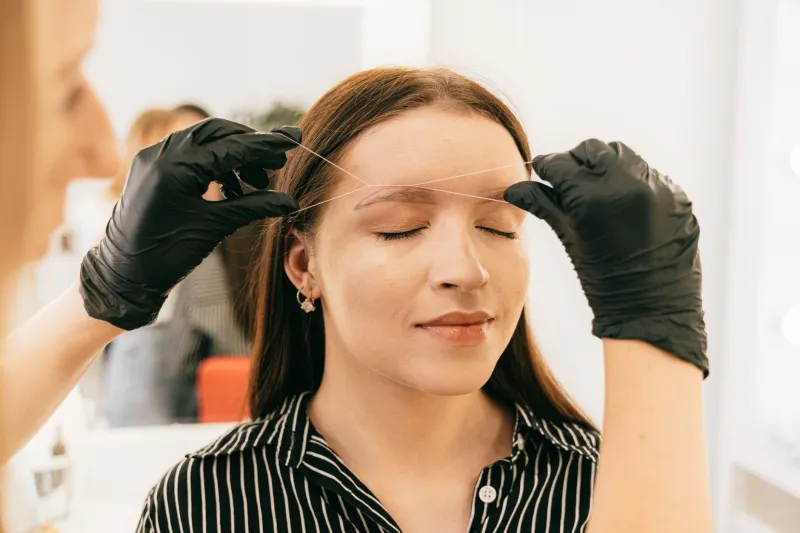
Threading is often marketed as the gentler alternative, and in many ways it is — it doesn't pull at the skin the same way wax does. But threading still involves repeated mechanical friction across the skin's surface. When performed frequently or by someone who isn't adjusting their technique to your skin type, it can cause surface irritation, temporary redness, and in some cases, post-inflammatory hyperpigmentation, especially in deeper skin tones.
Brow tinting and dye treatments add another layer of risk. Many tints contain chemicals like hydrogen peroxide and para-phenylenediamine (PPD) that can be sensitizing — particularly when applied to already-compromised skin. If your barrier is weakened from a recent waxing session, applying a chemical tint shortly after essentially rolls out the welcome mat for irritation.
Signs Your Brow-Area Skin Barrier Is Struggling
Not sure if your routine is causing damage? Your skin will usually tell you. Watch out for:
- Persistent redness or pinkness that lingers for more than a day after a treatment
- Dry, flaky patches right along your brow line
- A tight or "raw" sensation after brow grooming
- Increased sensitivity to skincare products you've used without issue before
- Small bumps or breakouts concentrated around the brow area
- Darkening or uneven skin tone along the brow arch (especially common in melanin-rich skin)
Any of these are signals worth paying attention to. They're your skin waving a flag, not just temporary side effects to push through.
How to Protect Your Skin Barrier Without Giving Up Great Brows
The good news is that you don't have to choose between well-groomed brows and healthy skin. It's genuinely possible to have both — you just need to be a little more intentional about how you approach your routine.
Space out your treatments. Giving your skin four to six weeks between waxing sessions allows the barrier adequate time to repair itself. Resist the urge to touch up constantly in between.
Communicate with your brow specialist. A skilled technician — like the ones at Beauty & The Brow Orlando — will assess your skin's condition before diving in. If your skin looks reactive or compromised, a good specialist will adjust their approach, use gentler techniques, or recommend waiting. This isn't just good service, it's good skin science.
Apply a barrier-supporting product after treatments. Look for ingredients like ceramides, niacinamide, and panthenol (vitamin B5). These help replenish the lipid layer and calm inflammation after any kind of brow service. A simple, fragrance-free moisturizer applied to the brow area post-treatment goes a long way.
Avoid active skincare ingredients around brow appointment days. Retinoids, AHAs, BHAs, and vitamin C can thin the skin's surface layer and make it more vulnerable to mechanical trauma. Stop using them in the brow area at least 48 hours before any treatment, and hold off for a day or two after as well.
Consider threading over waxing if your skin runs sensitive. While threading isn't completely without risk, it avoids the adhesive trauma of wax and tends to be less disruptive to the skin barrier overall. At Beauty & The Brow Orlando, our threading specialists are trained to work with minimal friction and maximum precision — which matters a lot for skin health.
Don't skip SPF. The brow area is exposed to UV radiation just like the rest of your face, and UV damage compounds barrier dysfunction. A broad-spectrum SPF 30 or higher worn daily helps protect the collagen and lipid structure in this zone, especially here in sunny Central Florida where the sun doesn't take days off.
The Bottom Line
Beautiful brows and healthy skin aren't at odds with each other — but getting both requires a little more awareness than most of us bring to our beauty routines. Understanding that your skin has a protective system that can be disrupted by the same treatments you rely on for grooming is the first step toward making smarter choices.
At the end of the day, precision matters — not just in the shape of your arch, but in how your brow treatments are performed and how you care for your skin in between. That's exactly the kind of thoughtful, informed approach we're committed to at Beauty & The Brow Orlando. Because great brows should never come at the expense of a great complexion.